I have always been spiritual and into spirituality rituals. From the time I was little I felt drawn to something outside of me, something bigger than me, bigger than all of us. After decades of practicing spirituality deeply, returning to my spirituality rituals feels like coming home. It is woven into the very fabric of my being at this point. These are the practices I have always turned to in life, especially in hard times, for some semblance of peace and balance.
That is what spirituality rituals do. They do not require perfection or a dedicated altar or hours of free time. They require intention. And when you practice them consistently they become anchors, something solid to return to when life feels chaotic or disconnected.
Here are the five I return to again and again. Not because they are trendy but because they actually work.
Table of Contents
- What Are Spirituality Rituals?
- Why Spirituality Rituals Matter for Grounding
- 5 Spirituality Rituals That Actually Help You Feel More Grounded
- Types of Spirituality Rituals Across Different Traditions
- Daily Spirituality Rituals You Can Start Today
- Spirituality Rituals vs Rites and Ceremonies
- How to Build Your Own Spirituality Ritual Practice
- FAQ About Spirituality Rituals
What Are Spirituality Rituals?
Spirituality rituals are the practices you return to when you want to slow down, feel grounded, and reconnect with something deeper than the noise of everyday life. They are not about rules or perfection. They are about intention.
A spirituality ritual can be something ancient like prayer or fasting, or something beautifully simple like a quiet moment of reflection at the start of your day or time spent in nature with no agenda. What makes a ritual spiritual is not the form it takes but the meaning you bring to it.
For me spirituality rituals create space. Space to listen inward, to reset emotionally, and to feel more aligned with who I am and how I want to move through the world. I return to them most when life gets hard because there is a peace that comes over me when I come back to something that has brought me calm before. I trust it. I know how it will make me feel. That familiarity is itself a kind of medicine.
If you are exploring your spiritual path more deeply, these 25 questions on spirituality are a beautiful place to start.
Why Spirituality Rituals Matter for Grounding
When we talk about feeling grounded we mean feeling present, stable, and connected to ourselves. Not swept away by anxiety or distraction or the relentless pace of modern life.
Spirituality rituals help because they are consistent. They give your nervous system a familiar signal that it is safe to slow down. Over time the ritual itself becomes the cue for calm. Consistent contemplative practices reduce stress, improve emotional regulation, and increase a sense of meaning and purpose. Whether you approach this from a spiritual lens or a practical one the outcome is the same. You feel better when you practice intentionally.
If you are doing deeper personal work alongside your spirituality rituals, my Self-Love Workbook is a powerful companion designed to help you heal, build confidence, and grow.
5 Spirituality Rituals That Actually Help You Feel More Grounded
1. Meditation
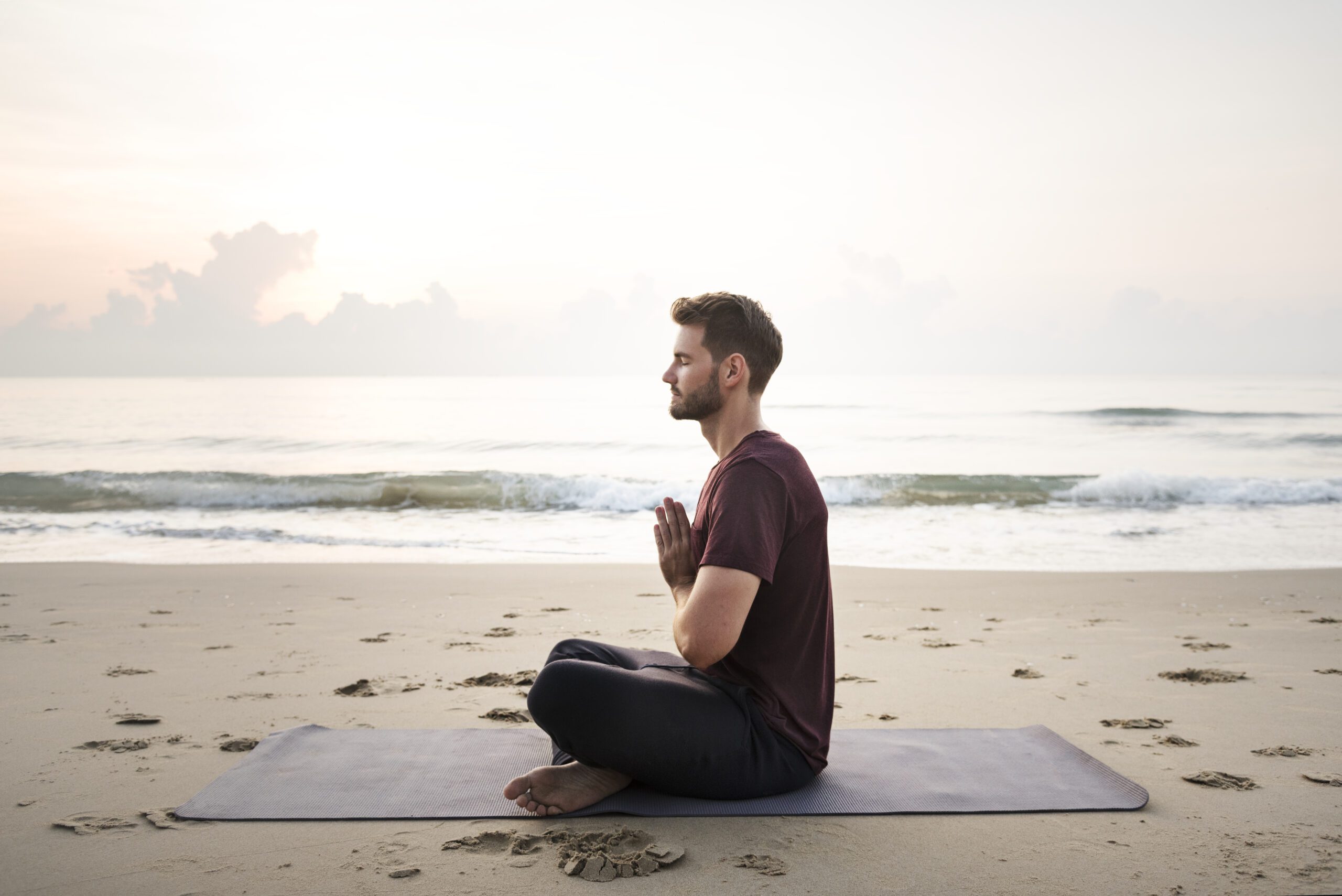
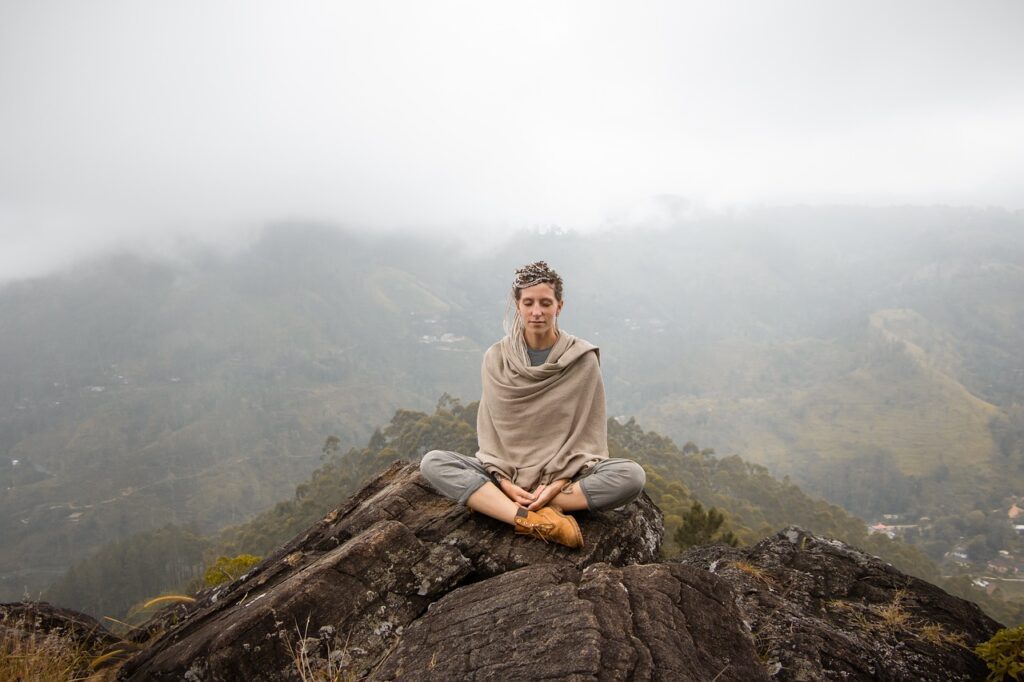
Meditation is one of the most universally practiced spirituality rituals across traditions and cultures. At its core it is about training your attention, learning to be present with what is rather than lost in what was or what might be.
Meditation is my absolute go to. There is so much peace and calm that is evoked through my daily meditation practice. After decades of practicing I can tell you that even on the hardest days, sitting in stillness and returning to my breath shifts something in me that nothing else can quite replicate.
You do not need to meditate for an hour to feel the benefit. Even ten minutes of focused breathing or quiet contemplation can shift your state significantly.
How to practice it: Find a comfortable seat, close your eyes, and bring your attention to your breath. When your mind wanders, and it will, gently bring it back without judgment. That returning is the practice. Start with five to ten minutes daily and build from there.
For a deeper look at how meditation and spirituality rituals work together, this conversation on self-care rituals for finding peace is well worth your time.
2. Prayer
Prayer is one of the oldest spirituality rituals in human history and it looks different for everyone. It is a way of communicating with something greater than yourself, a higher power, the universe, Source, God, whatever that means to you. It can be formal or completely spontaneous.
One of the most personal spirituality rituals I have created for myself weaves prayer and reiki together. I have turned practicing reiki into a form of meditative prayer. It is a way for me to not only send loving vibrations and healing energy but to affirm that I am a conduit of light and that the energy going out is from the light and from Source. This also allows that powerful Source to move through me, feeding me and nurturing me and healing me at the same time. It is one of the most profound practices I have ever found.
How to practice it: You do not need a script. Start by expressing gratitude for three things each morning before you get out of bed. Then ask for guidance on whatever is weighing on you. Keep it honest and keep it personal.
3. Nature Connection
Spending intentional time in nature is one of the most underrated spirituality rituals available to us. It costs nothing and the benefits are immediate. Nature has always been something I lean on deeply to awaken peace and tranquility in my life. There is something spiritually restorative about remembering that you are part of something much larger than your to do list.
There is a Japanese practice called Shinrin-yoku or forest bathing that involves simply being present in a forest environment. I actually created a short video on forest bathing with well known Nature Connection Coach Hana Lee Goldin where she shares her most powerful tips for connecting more deeply in nature. It is well worth watching.
How to practice it: Go outside with no agenda. Leave your phone in your pocket. Walk slowly. Notice what you hear, smell, and feel. Let yourself be in it rather than moving through it. Even twenty minutes makes a difference.
For more on the spiritual dimensions of our relationship with the natural world, check out this post on how to tell if you are one with the universe.
4. Ritualistic Ceremony
Ceremonies and symbolic spirituality rituals help mark moments and transitions with intention. They tell your mind and body that something significant is happening. They create memory and meaning.
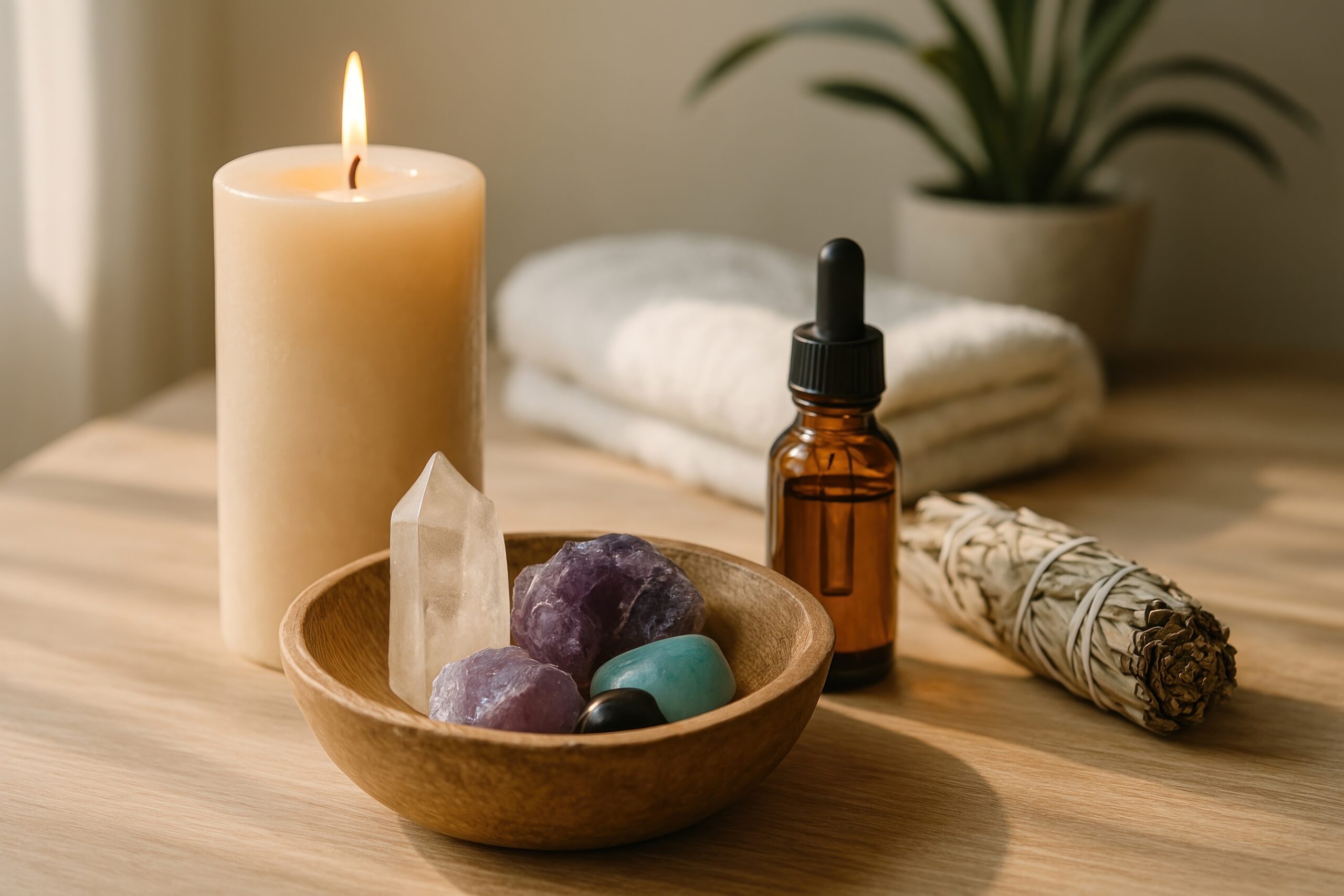
You do not have to belong to a specific tradition to create ceremony in your life. Lighting a candle before journaling, burning written intentions, or marking a new moon with a moment of reflection are all forms of personal ceremony.
How to practice it: Choose one transition point in your day or week and ritualize it. Light a candle when you sit down to write. Create a small altar with items that carry meaning for you. The objects matter less than the intention behind them.
The Hindu Aarti ceremony involves waving a lit flame before a deity to symbolize the offering of oneself to the divine and the removal of darkness. The symbolism is beautiful and translatable regardless of your tradition.
5. Fasting and Intentional Abstinence
Fasting is found in nearly every major spiritual tradition for a reason. It builds discipline, sharpens awareness, and creates a felt sense of gratitude for what you normally take for granted. When practiced with intention it becomes less about restriction and more about clarity.
You do not have to fast from food to experience the benefits of this spirituality ritual. A digital fast or a social media fast carries the same energy of intentional restraint and can be enormously clarifying.
How to practice it: Start small. Try a half-day fast from food or a full day away from social media. Notice what comes up when you remove a habitual comfort. That noticing is where the growth lives.
During Ramadan, Muslims fast from sunrise to sunset for an entire month. The fast becomes a container for self-reflection, increased devotion, and empathy. The spiritual impact goes far beyond the physical act.
Types of Spirituality Rituals Across Different Traditions
Spirituality rituals take many forms shaped by culture, belief, and personal experience. Some are practiced daily, others seasonally, and some only during important life transitions. What they share is intention, a conscious choice to slow down and connect more deeply.
Daily Spirituality Rituals
Daily spirituality rituals are usually simple and grounding. Meditation, prayer, journaling, breathwork, and moments of gratitude can all become rituals when practiced with awareness. These small acts bring presence into everyday life and over time they build a felt sense of inner stability that carries you through harder seasons. For a deeper exploration of goddess-centered daily practice, this post on goddess spirituality is a wonderful read.
Cultural and Traditional Spirituality Rituals
Many spirituality rituals are rooted in ancient traditions passed down through generations. Ceremonies, prayers, fasting periods, and symbolic practices often mark transitions, sacred seasons, or significant life events. They carry shared meaning and remind us that the longing for connection and transcendence is deeply human. The philosophy of Ralph Waldo Emerson and transcendentalism offers a fascinating lens for understanding how this longing has shaped Western thought.
Personal and Intuitive Spirituality Rituals
Some of the most meaningful spirituality rituals are entirely personal. They are the ones that evolved organically from what you needed at a particular time in your life. My reiki and prayer practice is exactly that. It was not something I was taught as a single practice but something I created from years of deep spiritual seeking. Those personal rituals tend to be the most enduring because they belong completely to you.
Daily Spirituality Rituals You Can Start Today
You do not need to overhaul your life to build a meaningful spirituality ritual practice. Here are five simple rituals you can begin immediately.
Morning gratitude: Before you look at your phone, name three things you are genuinely grateful for. Say them out loud if you can.
Intentional breathing: Take three slow deep breaths before any significant transition in your day. Before a meeting, before a difficult conversation, before you eat.
Evening reflection: Spend five minutes at the end of your day with two questions. What went well today? What do I want to release?
Journaling: Even three sentences a day builds self-awareness over time. Write what you feel not what you think you should feel. My Self-Love Workbook gives you a structured compassionate framework for exactly this kind of honest self-inquiry.
Nature moments: Step outside once a day with no purpose other than to be outside. That is it.

Spirituality Rituals vs Rites and Ceremonies
People often use these words interchangeably but they are not quite the same thing and understanding the difference can help clarify your own practice.
Spirituality rituals are ongoing practices you return to regularly. They can be entirely personal and do not require an audience or a formal structure. They are the daily and weekly anchors of your spiritual life.
Spiritual rites are connected to significant transitions or passages. They mark moments of change such as initiation, healing, or transformation. Rites tend to carry symbolic weight and are often rooted in tradition.
Ceremonies are usually collective. They bring people together to honor something shared, a seasonal change, a life event, a sacred observance. Ceremonies often include rituals within them but their focus is communal rather than individual.
For more on how spirituality rituals intersect with personal evolution, this post on soul evolution goes deep.
How to Build Your Own Spirituality Ritual Practice
The best spirituality ritual practice is the one you will actually do. Here is a simple framework for building yours.
Start with one ritual. Do not try to build an entire practice from scratch. Pick one thing from this post that resonates and commit to it for two weeks.
Be consistent over intense. Five minutes every day is more powerful than an hour once a week. Consistency is what creates the felt sense of trust in a practice.
Let it evolve. Your practice will change as you change. What you need in a season of grief is different from what you need in a season of growth. Stay flexible.
Pair it with something you already do. The easiest way to build a new habit is to attach it to an existing one. Meditate right after you make your morning coffee. Journal right before you go to sleep.
Go deeper with guided support. If you are ready to do more intentional inner work alongside your spirituality rituals, my Self-Love Workbook walks you through healing, confidence building, and personal growth in a structured compassionate way.
FAQ About Spirituality Rituals
What are the most powerful spirituality rituals? The most powerful spirituality rituals are the ones you practice consistently. Meditation, prayer, and time in nature are among the most widely practiced and well-supported across traditions, but the rituals that resonate most with you will always be the most powerful ones for you.
How do I start a spirituality ritual practice if I am a beginner? Start with one simple practice and do it daily for two weeks before adding anything else. Morning gratitude, a five minute meditation, or an evening journaling practice are all excellent starting points. The goal is consistency not complexity.
How are spirituality rituals different from habits? A habit is something you do automatically. A spirituality ritual is something you do with intention and awareness. The actions can look identical but the ritual carries conscious meaning that a habit does not.
Can spirituality rituals help with anxiety? Yes. Consistent contemplative practices like meditation, breathwork, and prayer have been shown to reduce cortisol levels and activate the parasympathetic nervous system. Beyond the physiology, spirituality rituals create a sense of predictability and safety that is especially grounding for anxious minds.
Do spirituality rituals have to be religious? No. Spirituality rituals can be entirely secular. Spending intentional time in nature, journaling with presence, or creating personal ceremony around transitions are all powerful practices that do not require any religious framework.
How long does it take for spirituality rituals to work? Most people notice a shift within two to four weeks of consistent daily practice. The key word is consistent. Daily practice, even brief, builds something real over time.
Ready to go deeper? My Self-Love Workbook is a guided journal for healing, confidence, and personal growth that pairs beautifully with any spirituality ritual practice you are building.