

Optimal health and wellness is not a destination you arrive at. It is something you tend to every single day, in small intentional ways, across every dimension of who you are. A good smoothie, a brisk walk in nature, ten minutes of silence. Mind, body, and soul, each and every day. That is what it looks like when you are truly living it.
I have been on this path for over 30 years as a Reiki Master, podcaster, and wellness educator, and what I know for certain is that the people who thrive are not the ones with the perfect diet or the most rigorous workout routine. They are the ones who have learned to tend to all of it, including the inner life that most wellness content never touches.
This is the resource I wish had existed when I was starting out. It covers everything from food and movement to sleep, mindfulness, nervous system health, creativity, nature, and the mental and emotional work that holds it all together. If you are ready to go deeper with your overall wellbeing, you are in exactly the right place.

Table of Contents
What Optimal Health and Wellness Actually Means
Most wellness content will tell you to eat more vegetables and exercise three times a week. And yes, those things matter. But optimal health and wellness in its truest sense means functioning well physically, mentally, emotionally, and spiritually. It means having energy and vitality. It means feeling grounded in your body and at peace in your mind. It means building a life where wellness is not something you chase but something you live.
For me that looks like a fruit and grains bowl in the morning, a lot of water throughout the day, a walk outside, and at least ten to fifteen minutes of complete silence. Not every day is perfect. But the intention is there every day, and that intention is everything.
True optimal wellness also means doing the inner work. Learning acceptance. Learning to surrender. Finding practices that bring you back to yourself when life pulls you under. That is what we are going to cover here.
The Mind Body Soul Framework
Optimal wellness lives at the intersection of three things: what you put into your body, how you move and rest your physical self, and how you tend to your inner life. Miss any one of those and the whole thing becomes lopsided. The framework I return to again and again is simple: do at least one thing for your mind, one thing for your body, and one thing for your soul every single day.
It does not have to be elaborate. The consistency is what creates the transformation.
Nutrition for Optimal Health and Wellness

Why Food Is the Foundation
The food you eat is information for your body. Every meal either builds you up or breaks you down at a cellular level. Eating for optimal health is not about restriction or perfection. It is about choosing foods that give your body what it actually needs to function, heal, and thrive.
When you eat well consistently you have more energy, more mental clarity, better sleep, and a more regulated nervous system. The research is clear that what we eat is directly connected not just to physical health but to mood, cognition, and emotional resilience. Harvard Health also notes that what we eat directly impacts sleep quality, making nutrition and rest deeply interconnected pillars of overall wellness.
The Best Foods for Optimal Health and Wellness
For a deep dive into the specific foods that support optimal wellness, including my personal favorites and how I incorporate them into my daily routine, visit my post on the 10 best foods for optimal health and wellness. The short version: prioritize whole foods, lean proteins, healthy fats, cruciferous vegetables, leafy greens, berries, legumes, and seeds. Hydration is non-negotiable. And pay attention to how different foods make you feel, because your body is always telling you something.
Mindful Eating as a Wellness Practice
Optimal nutrition is not just about what you eat but how you eat it. Slowing down, being present with your food, noticing hunger and fullness cues, and eating without distraction are all part of a mindful approach to nourishment. For more on this practice visit my post on mindful eating.
Movement and the Body
Exercise as Medicine
Movement is one of the most powerful tools we have for optimal health and wellness. Regular physical activity reduces the risk of chronic disease, improves mood, supports cognitive function, and helps regulate the nervous system. But it does not have to mean a gym membership or an intense workout program. Walking, stretching, dancing, swimming, yoga: any form of movement that you will actually do consistently is the right form of movement for you.
Getting Into Nature as a Healing Practice
One of the most underrated forms of movement and healing is simply being outside. Nature has a measurable effect on the nervous system. It lowers cortisol, reduces anxiety, and creates a felt sense of connection and calm that is hard to replicate indoors. A brisk walk in nature is not just exercise. It is medicine for the mind and the soul. If you have not explored forest bathing as a deliberate wellness practice, it is worth your time.
Sleep: The Most Underrated Pillar of Optimal Wellness
My Personal Journey with Chronic Insomnia
I want to talk about sleep honestly because I lived in the thick of sleep deprivation for decades and I know how devastating it can be to every area of your health and your life.
When I was sixteen years old something traumatic happened that was such a shock to my psyche that I simply stopped sleeping. What followed was decades of chronic insomnia and an exhausting search for solutions. I tried everything, every alternative remedy, every supplement, every approach I could find. Nothing truly worked until I went through cognitive behavioral therapy for insomnia at Stanford.
What I learned there changed my life. So many things we never consider when it comes to sleep: the lights in our environment, how much liquid we consume before bed, screen time and online stimulation, room temperature, the importance of getting in and out of bed at the same time every night, building sleep drive by not staying in bed once you are already awake, and never working or writing in bed. That last one was a hard habit to break.
If you are struggling with sleep know that there is real treatment and real tools that make a measurable difference.
Tools That Have Transformed My Sleep
Beyond the behavioral work, certain tools have genuinely supported my ability to wind down and sleep well.
My Allay lamp is something I reach for every evening. It brings a calm and serenity into my space right before bed that is the perfect way to bring everything down a notch and get my mind and body ready for rest. The green light technology is specifically designed to be gentle on the nervous system and I feel the difference every single night.
My Quiet Mind weighted pillow is truly like a big giant hug. It is scientifically proven to induce calm and I can personally attest to the fact that it does exactly that. If you are dealing with anxiety, restlessness, or the general overstimulation of modern life, a weighted pillow is worth exploring. You can also read why the Quiet Mind weighted pillow is the best and my comparison of weighted blankets vs weighted pillows for more.
Sleep Hygiene Basics
Even if you do not struggle with chronic insomnia, your sleep quality has an enormous impact on every other dimension of your wellness. Prioritize a consistent sleep and wake time, create a dark and cool sleep environment, limit screens for at least an hour before bed, and be mindful of how much you are drinking in the hours before sleep. According to Harvard Health, consistent sleep and wake times, a cool dark room, and limiting liquids before bed are among the most effective practices for better rest.
Mindfulness and the Inner Life
How Mindfulness Became My Anchor
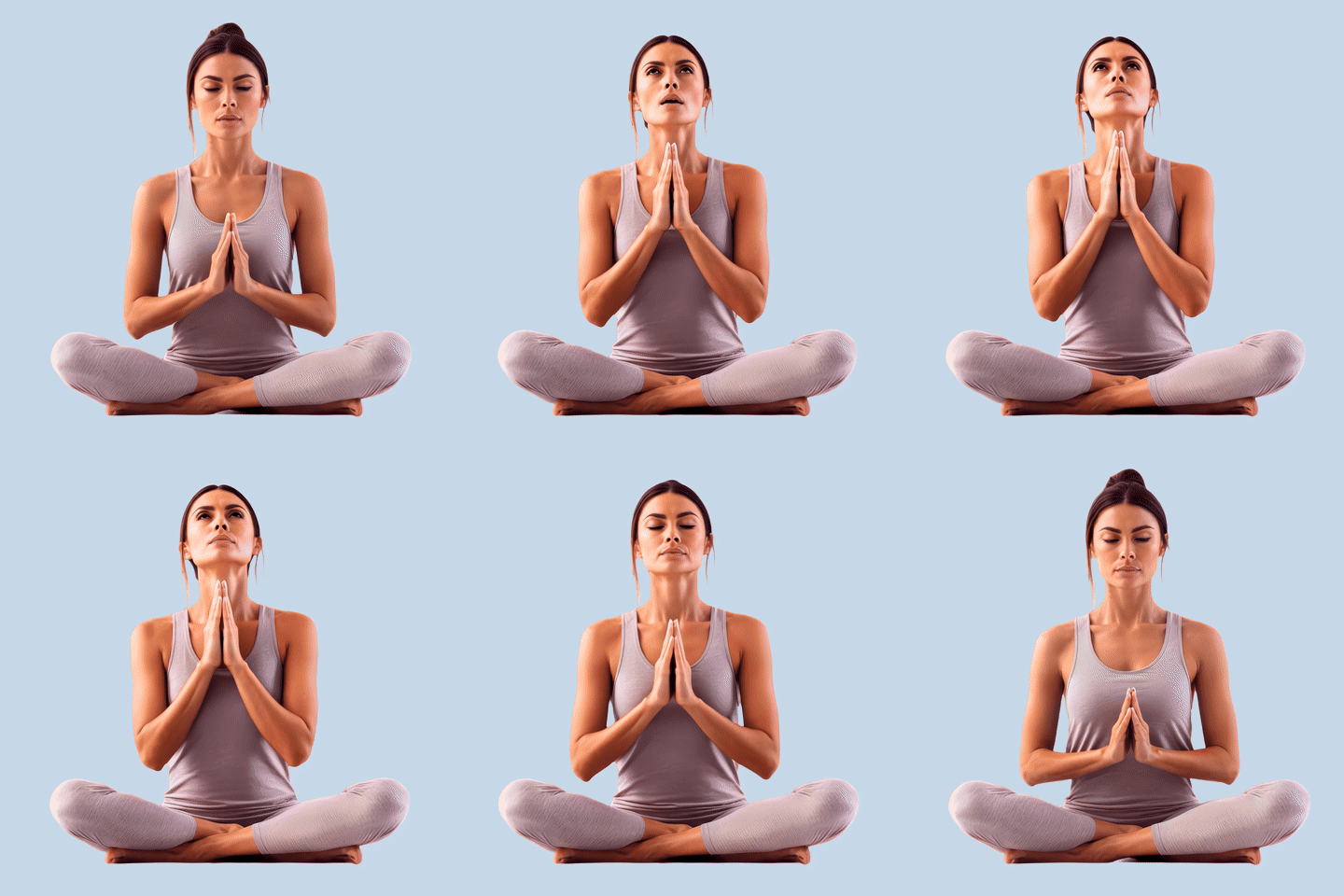
I grew up around meditation. My parents were meditators and yogis and I was exposed to the practice early, a gift I did not fully appreciate until my older years when life got hard in ways I was not prepared for. Learning to calm my mind, learning not to feel overwhelmed, learning acceptance and surrender: all of that came through mindfulness. It became my anchor when everything else felt unsteady. Mayo Clinic confirms that regular meditation can help manage symptoms of high blood pressure, chronic pain, depression, anxiety, and sleep problems, all in one simple daily practice.
On the Blossom Your Awesome Podcast I sat down with Dr. Daniel Winkle for a conversation on mindfulness and renewal that goes deep into the mind body connection and how the present moment creates genuine healing. And my conversation on finding contentment with insights from a yogi is one I return to often. If you want to build a practice that actually transforms your life, start with my mindfulness and meditation pillar.
Silence as a Daily Wellness Practice
One of the simplest and most powerful things you can do for your optimal health and wellness is to sit in silence every day. Not a formal meditation necessarily, just ten or fifteen minutes of turning off all external stimuli and being with your breath. No phone, no music, no input of any kind. Just you and the quiet.
For this practice I rely on my Renoo luxury mindfulness tools, particularly my meditation cushion which is my go to for tuning everything out and dropping into real solitude. In a world that is constantly activating our nervous systems this kind of deliberate stillness is not a luxury. It is a necessity.
Mental and Emotional Wellness
The Mind Is Part of the Body
You cannot separate your mental and emotional health from your physical health. They are the same system. Chronic stress, unprocessed emotion, and unresolved trauma all show up in the body. Learning to tend to your emotional life is not separate from optimal wellness. It is central to it. For a comprehensive resource on mental wellness specifically, visit my mental wellness pillar.
I had a powerful conversation with Leslie Lindsey Davis on the podcast about embracing emotions and how learning to sit with the hard stuff is ultimately how we heal. And my conversation with Dr. Hosein Kouros-Mehr on breaking through is a remarkable exploration of transformation from a physician-scientist perspective. Both are worth a listen.
When to Seek Professional Support
Sometimes the inner work requires outside help and that is not a sign of weakness. It is a sign of wisdom. Online therapy has made professional support more accessible than ever. BetterHelp connects you with a licensed therapist from wherever you are, on your schedule. I have vetted them carefully and believe that online professional support is every bit as valuable as in-person care. If you have been considering therapy, BetterHelp is offering 10% off your first month.
Creativity, Learning, and Soul Nourishment
Optimal health and wellness includes keeping your mind alive and your soul fed. Reading, learning, creating, making things with your hands, exploring ideas that stretch you: all of these are wellness practices. They stimulate the brain, reduce cognitive decline, and nourish something in us that goes beyond the physical.
I am a firm believer in always learning and always evolving. Pick up a book that challenges you. Write in a journal. Create something. The specific activity matters less than the intention behind it, which is to keep showing up for your own growth.
For inspiration on the reading front, my list of 25 greatest women’s spirituality books includes some of the most transformative reads I have ever encountered. And for building a real self-care practice that nourishes your soul alongside your body, visit my self-care pillar.
Building Your Daily Optimal Wellness Practice
You do not need a perfect routine. You need a sustainable one.
In the morning: hydrate before anything else, eat something nourishing, spend a few minutes outside or near a window, and set an intention for the day.
During the day: move your body in some way, limit unnecessary stimulation, take breaks from screens, and check in with how you are feeling rather than pushing through on autopilot.
In the evening: begin winding down at least an hour before sleep, dim your lights, put your phone away, and give your nervous system permission to settle. Your Allay lamp is perfect for this transition.
Throughout all of it: tend to at least one thing for your mind, one thing for your body, and one thing for your soul. Every single day.
Final Thoughts on Optimal Health and Wellness
Optimal health and wellness is the most personal journey you will ever take. Nobody else can define it for you or walk it for you. But you do not have to walk it alone. The resources here, the podcast conversations, the books, the tools, the practices, are all here to support you wherever you are on the path.
If you are ready to go deeper into your inner work, download my free Ultimate Self-Inquisition Guide. It is a 28 page contemplative workbook designed to take you deep within yourself and deep into your relationships with all of those around you.
And if you are ready to invest in yourself at the next level, my Self-Love Workbook is a guided journal for healing, confidence, and personal growth that will meet you exactly where you are.
Awesomeness dwells within you. This is your invitation to tend to it.
FAQ
What is optimal health and wellness?
Optimal health and wellness means functioning well across every dimension of your life, physically, mentally, emotionally, and spiritually. It is not a fixed state but a daily practice of tending to your mind, body, and soul.
What are the pillars of optimal health and wellness?
The core pillars are nutrition, movement, sleep, mindfulness, mental and emotional health, and soul nourishment through creativity and continued growth.
How do I start living more optimally?
Start small and start where you are. One nourishing meal, one walk outside, ten minutes of silence. Build from there. Consistency over time creates transformation.
Can mindfulness really improve physical health?
Yes. Decades of research show that mindfulness practices reduce cortisol, lower blood pressure, improve sleep quality, and strengthen immune function. The mind and body are one system.
What role does sleep play in optimal wellness?
Sleep is foundational. Without adequate quality sleep every other pillar of wellness is compromised. It affects cognition, mood, metabolism, immune function, and emotional regulation.