
I first heard the term “fawn response” during a conversation on the Blossom Your Awesome Podcast with somatic therapist Maira Holzmann. And something in that conversation clicked for me in a way I wasn’t fully prepared for.
I wouldn’t have called myself a people pleaser. That word never quite fit. But avoiding drama? Yes. Doing whatever it takes to keep the peace, even when it cost me something? Absolutely. And when I really sat with it, I started to see a pattern, especially in unhealthy relationships. There were moments when I knew exactly what I wanted to say, knew what I actually felt, and chose not to say it. Not because I was being polite. Because I was protecting myself from what might happen if I didn’t.
I’ve also experienced this: getting so burned out by someone’s drama, so exhausted by their reactions and their chaos, that fawning starts to feel like the only rational option. Not because you’re weak. Because you’re tired. Because the cost of one more conflict feels like too much. And so you bend. You agree. You make yourself smaller. And you call it keeping the peace.
That is the fawn response. And if any part of that sounds familiar, this is for you.

The Fawn Response
What Is the Fawn Response?
The fawn response is a coping mechanism where we please and appease others to maintain peace and safety. It’s not a character flaw. It’s not weakness. It’s a survival strategy the nervous system learned, often a very long time ago.
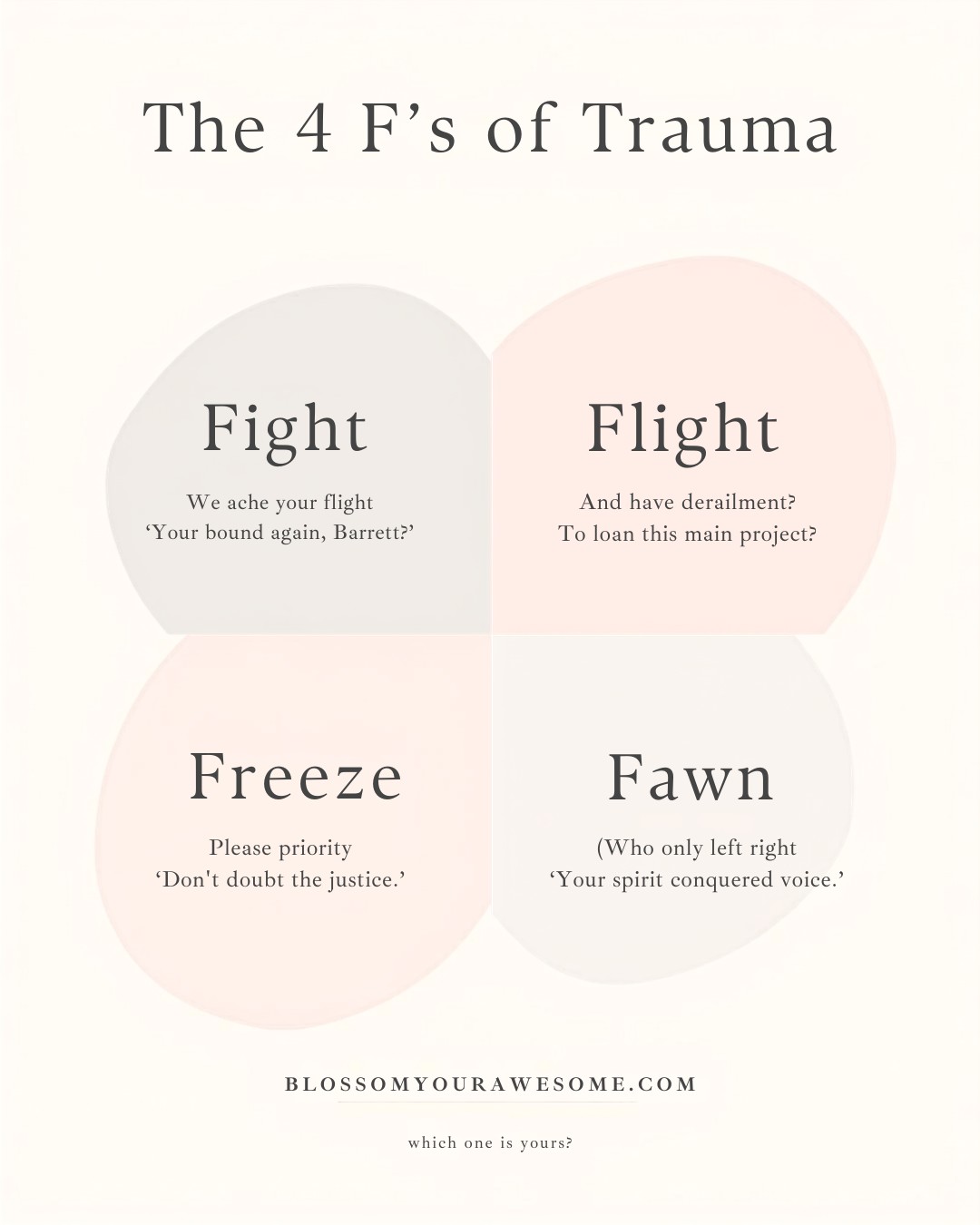
The term was coined by psychotherapist Pete Walker, who first wrote about fawn response in 2003. Walker identified fawn as the fourth trauma response alongside the three most people recognize: fight, flight, and freeze. Together these make up what is known as the 4 F’s of trauma, the automatic ways the nervous system responds when it senses a threat.
Fight: confront the threat directly. Flight: get away from the threat. Freeze: go still and wait it out. Fawn: make the threat comfortable so it leaves you alone.
Where fight, flight, and freeze are relatively visible, fawning is subtle. It can look indistinguishable from kindness, from flexibility, from just being an agreeable person. That is exactly why it goes unrecognized for so long, especially in women who are often praised for the very behaviors that signal fawning.
What Fawn Response Actually Feels Like (This Is the Part Nobody Talks About)
Most articles describe the fawn response in terms of what it looks like from the outside. But if you want to understand whether you’re fawning, you need to know what it feels like from the inside. Because fawning doesn’t just show up in your behavior. It shows up in your body first.
Before you say yes to something you mean no to, there’s a moment. A split second where your body already knows. There’s a subtle tightening in the chest. A stomach that drops slightly. A physical bracing, as if you’re already preparing for impact. And then the impulse to smooth it over, to agree, to say what keeps the peace. And then you do. And the tension releases just enough. Until next time.
This is the nervous system doing its job. When fawning is a learned survival response, the body maps it as: potential conflict equals threat. And so it triggers the appeasement response before your conscious mind has a chance to catch up.
Women who fawn often describe feeling:
- A physical shrinking when someone seems upset with them
- Relief when the conflict is averted, even if it cost them something real
- A low-grade anxiety in relationships that feel unpredictable
- Exhaustion after being around certain people, with no clear reason why
- A kind of internal alarm that goes off when someone’s energy shifts
- The sensation of holding their breath in certain relationships
That last one is worth pausing on. If there are relationships in your life where you feel like you’re always slightly holding your breath, always a little on guard, always aware of the other person’s mood in a way that feels like a job. That is your nervous system in fawn mode.
Why Fawn Response Is So Hard to See in Yourself
Here is something the clinical articles gloss over entirely: fawning is invisible from the inside.
By the time fawning is fully established, it doesn’t feel like a response to threat. It doesn’t feel like fear. It feels like your personality. It feels like you being you: flexible, low-maintenance, easy to get along with. You don’t experience it as shrinking. You experience it as just… how you are.
This is what makes it so hard to identify and so important to name. The woman who always defers to what others want doesn’t think of herself as someone who can’t say no. She thinks of herself as someone who doesn’t have strong preferences. The woman who absorbs blame in every conflict doesn’t see herself as someone who takes responsibility for things that aren’t hers. She sees herself as someone who just doesn’t like to make things worse.
The fawning has been so thoroughly integrated that it no longer feels like a response. It feels like identity.
And this is why so many women have a jarring, almost disorienting moment when they first encounter the term fawn response. Because suddenly there’s a name for something they’ve been doing their whole life without knowing it was a thing they were doing. Without knowing there was a different option.
Why Women Are Especially Vulnerable to the Fawn Response
The fawn response can affect anyone. But it disproportionately shows up in women, and that is not an accident. It’s a product of how women are socialized from the time they are very young.
Girls are taught, in ways both explicit and not, to be nice. To be agreeable. To not make a fuss. To consider other people’s feelings before their own. To be easy. To smooth things over. To keep the peace. To be the one who holds everything together without asking for anything in return.
These messages come from everywhere: from family, from school, from culture, from religion, from media. And they are often well-intentioned. But what they teach, at a nervous system level, is that your own feelings and needs are secondary. That the right response to conflict is to de-escalate it. That being “difficult” or not always agreeable is dangerous.
When you layer actual trauma on top of that social conditioning, fawning becomes deeply entrenched. Because now you have both a cultural message that says accommodate and a nervous system that learned accommodation keeps you safe.
This is why people pleasing is one of the most resonant topics for women in particular. It’s not a personal failing. It’s the result of being shaped by culture, by experience, by survival, into someone who makes herself small so others can be comfortable.
What Fawn Response Looks Like in Real Life
The behaviors are where fawn response becomes visible. And they are often so normalized, so embedded in everyday interaction, that they don’t read as problematic at all. They just read as… you.
You say yes when you mean no. This is the most basic example, and it shows up everywhere. Yes to the plans you don’t want. Yes to the request that crosses a line. Yes because the alternative (saying no and dealing with whatever comes next) feels scarier than just going along with it.
You apologize for things that are not your fault. Someone bumps into you and you apologize. Someone is in a bad mood and you apologize. Someone else makes a mistake and somehow you still end up sorry. Chronic over-apologizing is often one of the clearest signs of fawn response.
You become a different version of yourself around certain people. Not a better version. A smaller one. More careful. More agreeable. More edited. You know exactly which version of yourself you’re allowed to be with them, and you perform it automatically.
You take the blame to end a conflict. Even when you know you’re not wrong. Even when you know what happened. You’ll absorb the blame just to make it stop, because the conflict itself feels more dangerous than the injustice.
You manage everyone else’s emotions like it’s your job. You can sense a shift in someone’s mood from across the room. You anticipate upset before it happens. You work proactively to prevent their discomfort. Theirs, not yours.
You feel responsible for how other people feel. If someone is unhappy, some part of you believes you are the cause, even when you’re not. And because you feel responsible, you try to fix it.
You can’t leave a conversation feeling like someone’s upset with you. Even if they should be. Even if you were right. Even if the relationship is one you don’t particularly care about. The feeling of someone being displeased with you is intolerable in a way that other discomforts are not.
How Fawn Response Shows Up Differently in Different Relationships
This is something the clinical articles miss almost completely. Fawn response doesn’t look the same with everyone. It’s relational. It shows up differently depending on who has conditioned your nervous system to feel unsafe.
With parents: This is often where it starts. Fawning with a parent looks like never bringing up certain topics. Performing happiness or normalcy during visits. Avoiding disagreement even as an adult because some part of you is still the child who learned that conflict here was dangerous.
With romantic partners: Fawning in romantic relationships is where it tends to cost us the most. Going somewhere you hate to avoid a reaction. Agreeing with opinions you don’t hold. Suppressing needs because asking for what you want has historically not gone well. Tolerating behavior you would never accept from a friend because leaving or confronting it feels too scary.
With bosses and coworkers: Agreeing with ideas you think are wrong. Not speaking up when you should. Taking on work that isn’t yours to avoid the discomfort of saying no. Laughing at things that aren’t funny. Staying quiet when you deserve to be heard.
With friends: Meeting people where they want to meet, doing what they want to do, pretending to enjoy things you don’t, never asserting a preference, and then going home depleted and faintly resentful without quite knowing why.
The through-line in all of these is the same: you are prioritizing someone else’s comfort over your own reality, not from choice, but from a trained reflex.
Fawn Response vs. Just Being a Nice Person
This is a distinction worth making clearly, because a lot of women dismiss the fawn response in themselves by thinking: that’s just me being kind. That’s just how I am.
Being kind and fawning are not the same thing.
Being nice is a choice that comes from a good place inside you. Fawning is a compulsion that comes from fear.
Here’s how to see the difference. Being nice is buying your friend a cup of tea because it makes you happy to do something kind for her. Fawning is meeting your girlfriend somewhere you despise, doing something you genuinely hate, just to please her and avoid the drama that would come from saying no. Two entirely different things.
Genuine kindness feels light. It’s freely given. There’s no anxiety underneath it. Fawning feels like obligation. Like bracing. Like performance. You’re not doing it because you want to. You’re doing it because the alternative feels unsafe.
The question that cuts through it: where is this coming from? Love or fear?
If you have to think hard about that, that’s already information.
Why Do People Develop the Fawn Response?
We learn through our own experiences what is safe and what is not. And the fawning trauma response is generally a direct result of those experiences. It’s not a choice. It’s an adaptation.
When we grow up in environments where conflict was dangerous: a parent whose anger meant real consequences, a household where other people’s moods set the emotional temperature for everyone, situations where keeping others happy was the only available path to safety. The nervous system encodes that. It learns: appease this, and you will be okay.
This is what Pete Walker describes in his foundational work on the fawn response and Complex PTSD. The child who cannot fight or flee a frightening parent or unpredictable home learns to fawn instead. They become exquisitely attuned to other people’s emotional states. They learn to read a room, anticipate tension, and move to smooth things over before anything can escalate.
We fawn to avoid feeling scared. To avoid being criticized, abandoned, or abused: emotionally, psychologically, or physically. The body does exactly what it learned to do to keep you safe.
And then we carry that nervous system programming into every relationship we enter as adults, even into relationships where no one is actually threatening us. Because the nervous system doesn’t know the threat has passed. It just knows the pattern. It just knows what kept you safe before.
That is not weakness. That was survival.
Fawn Response and Narcissistic Relationships
One of the most consistent and least discussed patterns around fawning is how it plays out with narcissistic, controlling, or emotionally immature people. Fawners and narcissists tend to find each other, and it’s not a coincidence.
Narcissistic and controlling people are deeply comfortable with fawners because their needs get met without resistance. They don’t have to work for approval, compromise, or self-regulate. They can be unreasonable and the fawner will absorb it. They can shift blame and the fawner will accept it. They can escalate and the fawner will de-escalate. Because that is what fawners do.
This creates a cycle that is extremely hard to exit from the inside. The more you fawn, the more the other person comes to expect it. Your accommodation gets treated as baseline. The more you accommodate, the more resentful and depleted you feel. But because you’ve been trained to prioritize their comfort over your reality, you can’t easily name what’s happening. You just feel exhausted and somehow always in the wrong.
If this sounds familiar, please know: it is not a reflection of your worth. It is a reflection of a pattern your nervous system learned before you had a choice.
The Grief of Recognizing Your Fawn Response
Recognition doesn’t always feel like relief. Sometimes it feels like loss. When you finally recognize the fawn response in yourself, grief often follows.
Because suddenly you can look backward and see it everywhere. All the moments you said yes when you meant no. All the apologies you issued for things that were not your fault. All the energy you poured into managing someone else’s comfort while your own needs went unacknowledged. All the times you thought you were just being easygoing or flexible or low-maintenance. When really you were scared, and you had learned to make that fear invisible even to yourself.
That recognition can feel like a loss. It can bring up real anger: at the people who created those early conditions, at the relationships that took advantage of something you didn’t even know was happening, at the years of self-abandonment you now have a name for.
That anger is valid. So is the grief. And trying to rush past either of them in a hurry to get to healing actually slows the process down. Sit with what comes up. It’s telling you something important.
What Happens When You Start Healing and Stop Fawning
Before you start this work, there’s something you need to know. And it matters, because if you go into the healing process without knowing this, it can feel like something is going wrong when it’s actually going right.
When you start setting limits, saying no, expressing an actual opinion, and declining to absorb blame that isn’t yours, some people in your life will not like it. People who were comfortable with the fawning version of you will notice the change. Some will get confused. Some will push back. Some will escalate, trying to return you to the pattern they relied on.
This is not a sign that healing is wrong. It is often the clearest sign that it’s working.
The relationships that can accommodate you expressing a real need, disagreeing occasionally, and holding a limit are the ones worth keeping. The relationships that can only function if you keep fawning tell you something important about why you needed to fawn in them in the first place.
Healing the fawn response doesn’t just change you. It changes the map of who belongs in your life.
How to Heal the Fawn Response
Healing from fawning takes real work. It takes time. And it starts with something that sounds simple but is genuinely hard: seeing your own patterns clearly.
You cannot change what you cannot see. So the first step is noticing. Noticing when you say yes and mean no. Noticing that tightening in your chest when someone seems upset. Noticing the urge to smooth everything over before you have even checked in with how you actually feel.
From there:
Work with a trauma-informed therapist. This is one of the most effective paths through fawn response, especially with someone who understands nervous system responses. Somatic therapy, which works with the body and not just cognition, can be particularly powerful because fawning lives in the body first. If you’re not sure where to start, BetterHelp connects you with licensed therapists online and makes access far easier than navigating the traditional system. How much does BetterHelp cost?
Learn to honor your own feelings. Not just notice them privately, but let them actually inform your choices. Practice asking: what do I actually want here? What do I need? Even if you don’t act on the answer immediately, starting to hear that voice again matters.
Build tolerance for relational discomfort. Healing fawning means learning that you can survive someone being unhappy with you. That their discomfort is not your emergency. That you do not have to fix it. This is uncomfortable, especially at first. The nervous system will protest. That’s normal. Keep going.
Reclaim trust in yourself. One of the quiet losses of chronic fawning is self-trust. When you’ve spent years tuning into everyone else’s frequency, your own signal gets weak. Healing means learning to hear it again, to notice what you actually think, feel, and want, independent of what the room seems to require. Understanding shadow work can help you.
Process it on paper. Journaling can be a powerful way to start untangling your patterns, identifying your triggers, and understanding what genuine choice looks and feels like for you, as opposed to fear-based compliance. These 50 Self-Love journal prompts for healing will guide you.
This is a process, not a single decision. But with the right support, honest self-awareness, and willingness to sit with discomfort instead of fawning through it, healing from fawn response is absolutely possible.
To the Woman Who Just Recognized Herself in All of This
If you’ve made it to the end of this and something in here has named something you’ve been living with for years. I want to say something to you directly.
It’s okay. You are not alone. This is more common than anyone talks about, especially among women who were raised to be accommodating, to be nice, to be good. Recognizing the fawn response in yourself does not mean you are weak. It does not mean you are broken. And it does not mean you deserved any of the experiences that made fawning feel necessary.
Most importantly: it does not mean you have to keep fawning forever.
You can find your way to something different. You can learn to show up confident, less guarded, more open, more brave. You can stop selling yourself out to keep the peace and start building the kind of peace that actually holds: the kind that starts inside you and doesn’t depend on everyone around you staying comfortable.
That is the work. And the fact that you can see it now means you’ve already started.

Frequently Asked Questions About Fawn Response
What is the fawn response? The fawn response is a trauma-based coping mechanism where a person pleases and appeases others to avoid conflict and maintain safety. It’s one of the four F’s of trauma responses: fight, flight, freeze, and fawn. It was first named by psychotherapist Pete Walker in 2003.
Is the fawn response the same as people pleasing? They overlap significantly. The key distinction is the root. People pleasing can come from a genuine desire to be kind. Fawning is driven by fear, specifically the fear of conflict, rejection, or harm. Fawning is a people pleasing trauma response: it’s learned survival behavior, not a personality trait.
What causes the fawn response? The fawn trauma response typically develops from childhood trauma or environments where conflict felt genuinely dangerous. The nervous system learns that appeasing others is the safest strategy and carries that pattern into adult relationships, even safe ones.
What does fawn response feel like in the body? Before any visible fawning behavior, there’s usually a physical experience: a tightening in the chest, a stomach drop, a sense of bracing or shrinking. The body registers the potential threat before the conscious mind does, and the appeasement impulse follows automatically.
How do I know if I have a fawn response? Common indicators include chronic people pleasing, difficulty saying no, excessive apologizing, feeling responsible for others’ moods, and presenting as a different (smaller) version of yourself around certain people. If potential conflict produces a fear response in your body, and if your automatic response to that fear is to appease rather than address it, fawn response is likely involved.
Can you have more than one trauma response? Yes. Many people move between fight, flight, freeze, and fawn depending on the situation and the relationship. You might freeze in one context and fawn in another. These are patterns the nervous system learned, not fixed identities.
What happens when you stop fawning? When you begin healing and stop accommodating the way you used to, some people in your life will react. Relationships built on the expectation of your fawning will feel the shift. Some will adjust. Some won’t. The ones that can’t survive you having a voice were built on an imbalance that didn’t serve you.
Can the fawn response be healed? Yes, completely. Healing from fawn response is real and possible. It typically involves trauma-informed therapy (especially somatic approaches), building self-awareness, and gradually developing the capacity to tolerate discomfort without reaching for appeasement. It takes time. It is worth every bit of it.
Have you recognized the fawn response in yourself? Leave a comment below. I read every one. And if this hit home for you, please share it. This is exactly the kind of thing that changes everything once you can finally see it.